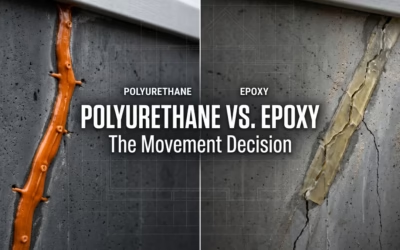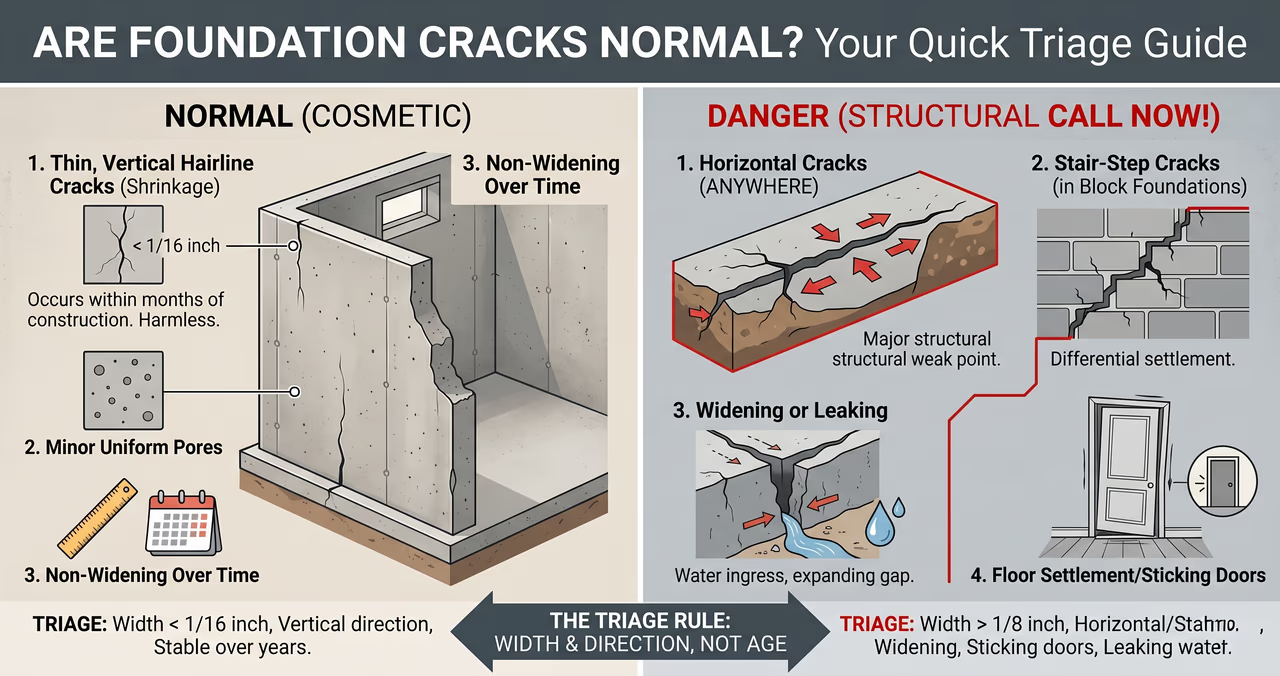
TL;DR. Are foundation cracks normal? In most Montréal basements, yes: thin vertical hairline cracks are usually cosmetic shrinkage from the original concrete cure. The cracks that demand a call are horizontal cracks anywhere on the wall, stair-step cracks in block foundations, and any crack that is widening, leaking, or paired with floor settlement or sticking doors. The triage rule is width and direction, not the age of the house.
Are foundation cracks normal in Montréal homes?
Yes, most foundation cracks in Montréal homes are normal. Quebec sits on heavy clay across most of the Montréal plain and the Rive-Sud, with winters that put basements through dozens of freeze-thaw cycles per season, and almost every poured concrete foundation built before 1990 has at least one hairline crack by year five. The presence of a crack is not the question. The width, direction, and behavior over time are. A thin vertical crack that has not changed in two years is almost always cosmetic. A horizontal crack that appeared this spring is a different conversation. This guide is the triage rubric we run through on first inspections, written for the homeowner who is staring at a crack in May and trying to decide whether to call.
When are hairline foundation cracks normal vs structural?
Hairline foundation cracks under 1 mm wide that run vertically and have not moved over two seasons are almost always normal shrinkage cracks, not structural problems. Concrete shrinks as it cures, and a poured residential wall pretty much always relieves that stress with one or two thin vertical cracks within the first year. They do not threaten the wall. They become a problem only when water starts coming through them, at which point the fix is crack injection rather than foundation reinforcement. The American Concrete Institute’s crack evaluation guide (ACI 224.1R) is the document a structural engineer would use to formally classify the crack; for a homeowner, the distinction comes down to three signals. Does the crack widen with the seasons? Does it leak? Is it paired with other movement signs like sticking doors, sloping floors, or new drywall cracks upstairs? If none of those signals are present and the crack is thin and vertical, the answer is monitor, not panic. The fix when it eventually leaks is documented in our crack injection services page.
What does a vertical foundation crack mean?
A vertical foundation crack usually means concrete shrinkage, minor settlement, or seasonal cycling, and is almost never structurally urgent on its own. Vertical cracks run top to bottom (or close to it) on a poured concrete wall, often originating at a form-tie point, a window corner, or a basement door corner. They are the most common crack type in Greater Montréal homes built between 1960 and 1990. The action depends on what the crack is doing: if dry and stable, monitor; if leaking, polyurethane injection; if widening visibly over months, get a structural engineer involved before any product is specified. A vertical crack that is widening at the top while staying narrow at the bottom is a settlement signal worth investigating, not a hairline shrinkage signal, and it deserves a closer look than a uniform-width crack.
What does a horizontal foundation crack mean?
A horizontal foundation crack is the most serious type because it almost always indicates lateral pressure from saturated soil pushing inward against the wall. A horizontal crack running along the wall, particularly at mid-height, means the wall is starting to bow under hydrostatic pressure or frost heave. That is not solved by injection alone: the underlying cause (soil pressure, poor drainage, missing exterior waterproofing) has to be addressed before any crack-filling makes sense. In a Greater Montréal context, where clay soils swell with spring melt and frost penetrates well below the slab in deep winters, a horizontal crack typically routes to exterior waterproofing, excavation, and grading correction, sometimes with carbon fibre reinforcement or steel bracing layered in. Horizontal crack on the wall equals stop calling injection companies and start calling for an engineered solution.
What is a stair-step crack in a block foundation?
A stair-step crack is a zig-zag crack that follows the mortar joints between concrete blocks in a stepped diagonal pattern, and it almost always indicates differential settlement under one corner of the foundation. The pattern climbs the wall along the mortar lines because mortar is weaker than the blocks themselves, so when the wall moves, the joints crack first. The cause is usually under the foundation, not in the wall: soil that has subsided under one footing while the rest of the foundation stayed in place. Stair-step cracks are most common in cinder-block foundations built before the mid-1970s in Greater Montréal, and they show up particularly often in homes that sit on clay-pocket lots in Saint-Léonard, Anjou, and parts of the Rive-Sud. They are not a polyurethane-injection job. The right next step is a structural assessment to identify the settling section, followed by an engineered solution (helical piers, push piers, or full foundation underpinning), with injection only used afterward to seal the cosmetic crack lines that remain.
What causes foundation cracks in Quebec homes?
The four most common causes of foundation cracks in Quebec homes are concrete shrinkage during the original cure, freeze-thaw cycling in winter, hydrostatic pressure from spring melt and rain, and differential settlement from expansive clay soil. Concrete shrinkage produces the hairline cracks within the first year and is harmless. Freeze-thaw cycling is the slow-burn driver: water enters a hairline crack, freezes, expands, and widens the crack a fraction of a millimeter each winter, which is why a crack that was cosmetic in 2020 can be leaking by 2026. Hydrostatic pressure is the spring-melt threat that opens horizontal cracks. The Association des professionnels de la construction et de l’habitation du Québec, which represents the Quebec residential construction industry, publishes performance standards that explicitly address the freeze-thaw exposure foundations have to handle in this climate. Differential settlement from clay soil is the long-term cause of stair-step cracks. Knowing which of the four is driving your specific crack is what determines whether the fix is injection, exterior waterproofing, or engineered underpinning.
How wide is a worrying foundation crack?
A foundation crack wider than 3 mm (about the width of a wooden coffee stirrer) is worth professional assessment regardless of direction. Below 3 mm, direction and behavior matter more than width: a thin vertical crack that is dry and stable is cosmetic, while a 1 mm horizontal crack on a poured wall is structurally urgent. The federal homeowner guide on foundation maintenance is explicit that multiple, severe, or expanding cracks warrant a specialist’s evaluation before any repair product is specified. The width threshold is a useful prompt, not a ceiling. A 0.5 mm crack that is leaking water is a real problem, while a 2 mm crack that has not moved or leaked in five years is usually nothing.
How to monitor a foundation crack at home
The simplest home monitoring method is the pencil-and-photograph approach. Mark a small pencil tick on the wall at each end of the crack and a third tick across the width at the widest point, then write today’s date next to each tick in pencil. Take a phone photograph of each marked point with something for scale (a coin works) and save the photos in a folder labeled with the address and the wall location. Repeat once a month for the first three months, then quarterly after that. If the crack lengthens past the end ticks, widens past the width tick, starts wetting between checks, or develops side branches, you have a moving crack and the timeline for calling someone shortens to weeks instead of years. If the marks are still exactly where you put them six months later, you have a stable crack. The same protocol works on stair-step cracks: mark and date the highest block the crack has reached.
When to call a contractor vs a structural engineer
Call a foundation contractor first if the crack is vertical, hairline-to-narrow, dry or only damp, and you have not seen any other movement signals in the house (sticking doors, sloping floors, new drywall cracks above). The contractor can diagnose, quote, and inject in a single visit. Call a structural engineer first if the crack is horizontal, stair-step in a block wall, wider than 3 mm anywhere, or paired with other movement signals. The engineer’s job is to identify why the wall is moving and specify the repair; the contractor’s job is to execute the specified repair. Foundation work is construction work under section 9 of the Quebec Building Act, so whoever does the physical work has to hold an RBQ licence regardless of who specified it. An unlicensed quote is a red flag, not a price advantage.
Book a free Sous-Sols Experts inspection
If you have a crack and you want a real diagnosis instead of a phone-based guess, our on-site inspections are free. We send a written report with the crack classified, the cause identified, the recommended fix named with the specific material (Sika polyurethane or otherwise), and the work bonded under RBQ licence #5668-8765-01. Pietro Di Benedetto takes the calls personally at (514) 979-5425.