TL;DR. Polyurethane vs epoxy in foundation repair is a movement decision, not a price decision. In Greater Montréal, almost every residential foundation crack is moving (clay soil, freeze-thaw), so polyurethane is the correct material in roughly 95% of cases at 400to700 per crack. Epoxy is reserved for stable structural cracks an engineer has signed off. Pick the wrong material and the repair fails by the second winter.
Polyurethane vs epoxy: the one question that decides it
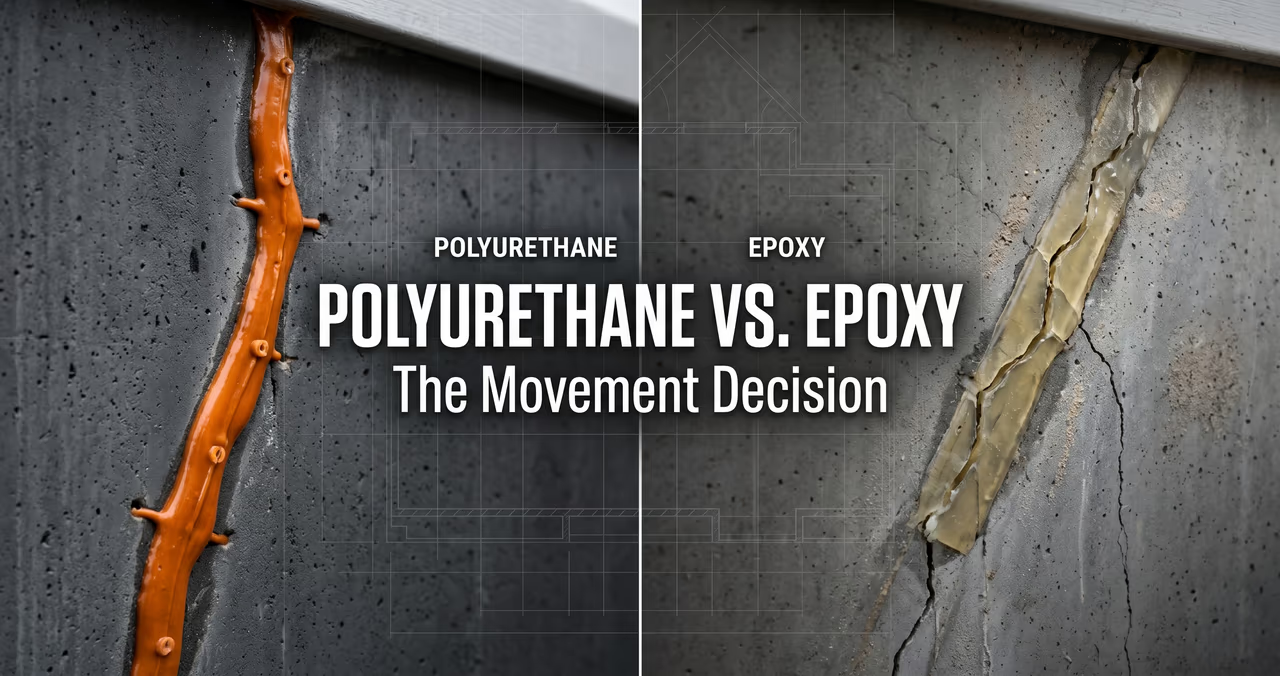
In twelve years of polyurethane injection foundation repair across Greater Montréal, one question settles every job before the resin is loaded: is the crack moving, or is it stable? Polyurethane is flexible and expands against water. Epoxy is rigid and bonds concrete back to itself. If the crack is moving (vertical settlement, seasonal cycling, freeze-thaw response) polyurethane is the only correct answer. If the crack is stable and a structural engineer has signed off on bonding the wall back together, epoxy is correct. The price difference between the two is real, but it is downstream of the diagnosis. Picking polyurethane to save money on a structural job is wrong. Picking epoxy because it sounds stronger on a moving crack is also wrong, and that one shows up the next winter.
What is polyurethane injection foundation repair?
Polyurethane injection foundation repair is a method where a flexible, expanding resin is pumped into a foundation crack under pressure to seal it against water while accommodating the crack’s natural seasonal movement. The chemistry reacts on contact with moisture inside the crack: the resin foams, expands to fill voids the eye cannot see behind the wall, and cures into a rubbery seal. Cured polyurethane has up to 400% elongation, which is the property that lets it survive a Quebec winter without tearing. The work is done from inside the basement through ports drilled along the crack, so it can happen year-round regardless of frost. Cure time is 24 to 72 hours depending on temperature and humidity, and the wall is dry by the following weekend in most cases. For a full breakdown of what the on-site work looks like, see our crack injection services page.
When is epoxy the right material for a foundation crack?
Epoxy is the right material when a structural engineer has confirmed the crack is stable and the goal is to restore load-transfer capacity to the concrete. The American Concrete Institute’s structural classification of cracks (ACI 224.1R-07) is what an engineer uses to decide whether the crack is carrying load, and only that classification justifies an epoxy spec. Epoxy injection also requires a dry substrate under the ICRI 110.2-2020 guide specification, so an actively wet or seeping crack is automatically off the menu for this material. Cured epoxy is harder than the concrete around it, which is the point: the repair welds the two faces of the crack together so the wall behaves as a single piece again.
The failure mode is the inverse of polyurethane’s strength. Epoxy does not move. If the crack starts cycling with the seasons after the repair, the surrounding concrete breaks before the epoxy does, and the crack reopens beside the original line. Epoxy on a moving crack fails by the second winter, and that pattern is consistent enough that we treat it as a hard rule, not a probability.
Why do most Montréal foundation cracks get polyurethane?
Most Montréal foundation cracks get polyurethane because the local clay soil and freeze-thaw cycle mean almost every residential crack is moving. Quebec sits on heavy clay across most of the Montréal plain and the Rive-Sud, which expands when wet and contracts when dry. Layer that under a foundation, add a winter that subjects the concrete to dozens of freeze-thaw cycles per season, and the result is cracks that breathe with the calendar. Industry estimates put polyurethane at roughly 95% of residential infiltration cases in Quebec for exactly this reason. The common shapes we see in Greater Montréal homes built between 1960 and 1985, particularly in Saint-Léonard, Anjou, Rivière-des-Prairies, and the West Island, are vertical settlement cracks running floor-to-ceiling, hairline cracks at form-tie points, and short diagonal cracks above basement windows. Polyurethane injection foundation repair is the default response to all three, with epoxy held in reserve for the small minority of cases where an engineer asks for it.
Hydrophobic vs hydrophilic polyurethane: which one for active leaks?
Hydrophobic polyurethane is the right choice for an actively flowing leak; hydrophilic polyurethane is the right choice for a damp, weeping micro-crack that is not yet flowing. The distinction is not marketing. Hydrophobic resin repels water, forms a rubber membrane behind the foundation wall, and blocks water from reaching the crack from the soil side. That behavior is what you want when you can see water running down the wall in real time. Hydrophilic resin behaves differently: it absorbs water and chases it deep into the pores and micro-cracks of the concrete, bonding tenaciously to wet substrate. The trade-off is that hydrophilic foam can shrink in dry conditions if the moisture source disappears, which is rarely a problem in a Montréal basement but worth flagging. On our jobs we run a Sika polyurethane and pick the chemistry based on what the wall is actually doing the day we open it, not what the homeowner described on the phone two weeks earlier.
How much does foundation repair injection cost in Montréal?
Most polyurethane crack injections in Montréal cost 400to700 per crack for a standard residential basement wall, and larger or structural jobs run 1,000to2,500. Quebec-wide price bands for 2026 foundation repair generally land in the same range. The variables that move the number are crack length and depth, accessibility (cluttered finished basements add labour time), whether the crack is actively leaking (which forces hydrophobic polyurethane and a slower pour), and whether structural reinforcement is required alongside the injection. Multi-crack jobs typically get a per-crack discount because the setup time is fixed. Where homeowners run into trouble is the cheap quote that swaps the wrong material to hit a lower number, usually epoxy on a crack that should be polyurethane. That repair holds for one season, fails on the second winter, and the total cost ends up being two repairs instead of one.
Vertical, horizontal, and hairline cracks: which gets which treatment?
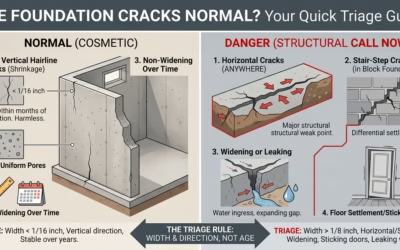
Vertical cracks usually get polyurethane, hairline cracks almost always get polyurethane, and horizontal cracks need an engineer’s eye before any injection. Vertical cracks in a poured concrete foundation are typically settlement or shrinkage cracks, both of which involve ongoing movement and route straight to polyurethane. Hairline cracks (under 1 mm wide) are the most common call we get; they almost always trace to seasonal cycling in clay soil and are textbook polyurethane work.
Horizontal cracks are the one to take seriously. A horizontal crack running along a foundation wall is often a sign of lateral pressure from saturated soil pushing inward, which can mean the wall is starting to bow. That situation is not solved by injection alone. The federal homeowner guide on foundation maintenance is direct: multiple, severe, or expanding cracks should be assessed by a structural specialist before any product is specified. If the assessment points to lateral pressure, the real fix is often exterior waterproofing and grading correction, with carbon fibre reinforcement or steel bracing layered in.
What goes wrong when the wrong material is picked
The most common failure pattern we see in Greater Montréal is epoxy applied to a moving crack on a 1960s or 1970s bungalow, usually because the previous contractor priced epoxy lower or wanted the harder-looking finish. The first winter passes and the wall looks fine. The second winter, the crack reopens beside the original epoxy line because the cured resin will not stretch and the concrete around it gives way instead.
The second pattern is polyurethane pumped into what was actually a structural crack the homeowner never had engineered. The water stops, but the load path was never restored, and a year later there is a fresh crack one course of block above or below the repair.
The third pattern is the surface-only patch sold as injection: a fast hydraulic cement smear over the visible crack with no port drilling, no pressure, no penetration into the wall. That one is purely cosmetic and is back within the same season.
The reason homeowners cannot easily tell these failures apart from a good repair is the timeline. All three look successful for the first eight to twelve months. The wall is dry, the patch holds, the basement smells normal. The second winter is when the diagnosis arrives.
Why RBQ licence and certified installation matter
Foundation work is construction work under section 9 of the Building Act, which means the contractor doing it must hold a Régie du bâtiment du Québec licence. The licence is not a formality. It is the homeowner’s primary mechanism of recourse if the work fails, because an unlicensed operator leaves no regulated path back to the money. A significant fraction of foundation work advertised on classified sites in Montréal is done by people without a current RBQ licence; that gap is invisible on the day the cheque is written and becomes the entire story when something goes wrong.
Sous-Sols Experts has been operating in Greater Montréal since 2013 under Pietro Di Benedetto, RBQ licence #5668-8765-01, SOPREMA certified applicator. The SOPREMA certification applies specifically to waterproofing membrane installation under the 25-year material warranty those systems carry; it is named here for credential context, not for the injection work itself. Pietro was profiled in Panoram Italia magazine in March 2021 and in Portail Constructo, the Quebec construction industry trade publication.
Book a written quote with an RBQ-licensed contractor
If you have a foundation crack and you want a real diagnosis before a price, the on-site inspection is free. We send a written quote with the materials named (not “high-quality membrane,” the actual Sika product), the cure time spelled out in days, and the work bonded under RBQ licence #5668-8765-01. Service area covers the Island of Montréal, Laval, the Rive-Sud, the Rive-Nord, and the West Island.
Call Pietro at (514) 979-5425 or email info@soussolsexperts.com.